The Exposure Triangle
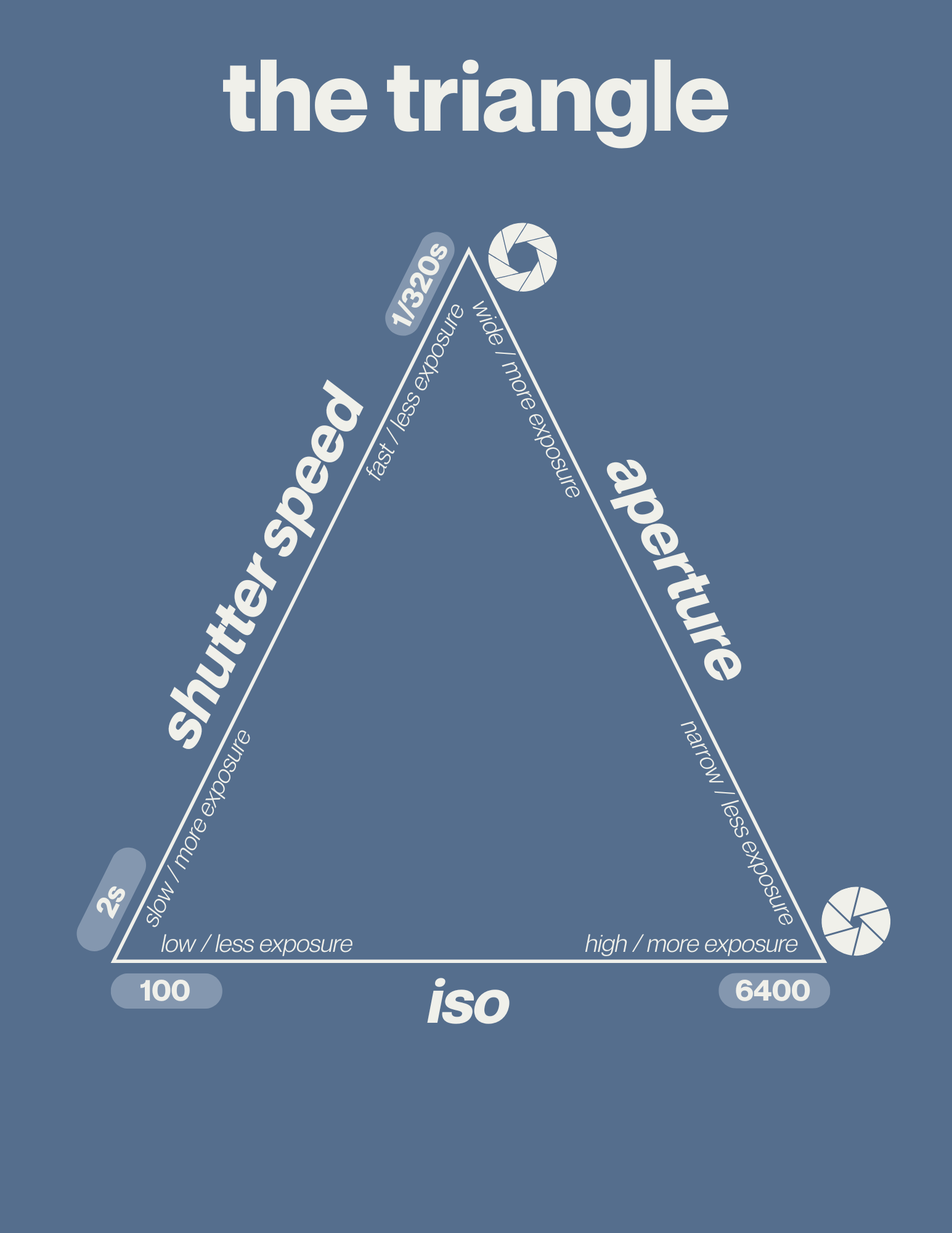
Imagine this. You just pulled up to a shoot, you had a bad night last night and all the things you’ve learned before have just escaped your mind, you need a quick reference of how to capture proper exposure, you pull up the “exposure triangle.” A perfectly crafted diagram to quickly explain how each fundamental camera setting (ISO, Shutter Speed, Aperture) affects exposure. Now you’re back in the game.
The popular term “exposure triangle” originated in 1990, from photographer Bryan Peterson.
What is Exposure?
Exposure is a technical term in photography and videography that relates to the amount of light that reaches your camera’s sensor which will then determine how bright or dark your image will be. There’s three crucial parts to setting exposure:
Aperture
If you were to look through your lens you would either see a very small, pin like hole or see straight through the glass because of a large opening. This is based on your current aperture setting. The larger the opening, the more light physically being let in and the more short or more shallow depth of field. On the flip side, the smaller the opening, the less light being allowed in and the longer or deeper depth of field achieved. In simpler terms, ask yourself, how much of your image do you want in focus?
Shutter Speed
